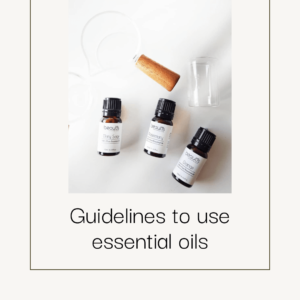

Struggling to fall asleep or stay asleep? Discover the best essential oils for sleep, how to use them effectively, and which blends of essential oils for sleep can help you finally rest the way your body deserves.
There’s a kind of loneliness that only comes at 2 a.m.
The house is quiet. Everyone else is asleep. But you’re lying there, eyes wide open, heart a little too loud, thoughts looping on things you can’t fix in the dark. You’ve tried counting sheep. You’ve tried breathing exercises. You’ve tried just willing yourself to sleep. And still — nothing.
If this sounds familiar, you are not alone. Millions of people around the world lie awake night after night, desperate for rest that feels just out of reach. And while there’s no single cure for sleeplessness, nature has given us something remarkably powerful: essential oils for sleep.
For centuries, plant-based aromatherapy has been used to calm the mind, ease the body, and gently coax the nervous system into rest. And today, science is beginning to confirm what our ancestors already knew. A systematic review published on PubMed found that the majority of studies on inhaled essential oils reported a positive effect on sleep quality — with no adverse events recorded.
In this guide, we’ll walk you through the top 7 best essential oils for sleep, how to use essential oils for sleep at home, and three powerful blends of essential oils for sleep that you can start using tonight.
Why Essential Oils Work for Sleep
Before we dive into the list, it helps to understand why these oils work — because it’s not magic, even if it feels that way.
When you inhale an essential oil, its aromatic molecules travel through the nose and interact directly with your olfactory system, which is wired straight into the brain’s limbic region — the seat of your emotions, memories, and stress responses. This is why a familiar scent can make you feel instantly calm, or why certain smells feel like a warm hug after a hard day.
Research published in Scientific Reports found that essential oil aroma can actually increase slow-wave (deep) sleep activity in the brain. That’s the kind of sleep where your body heals, your memory consolidates, and you wake up feeling genuinely restored — not just technically rested.
The right scent, at the right time, can shift your entire nervous system from “alert and anxious” to “safe and sleepy.” That’s a gift worth knowing about.
Top 7 Best Essential Oils for Sleep
1. Lavender Essential Oil — The Classic Comfort
If there’s one oil that has earned its reputation, it’s lavender essential oil.
Warm, floral, and deeply familiar, lavender has a way of making the world feel a little smaller and a little safer. Its primary compounds — linalool and linalyl acetate — have well-documented calming effects on the central nervous system. A meta-analysis published in Holistic Nursing Practice found significant sleep-enhancing effects across 11 randomized controlled trials and 628 adult participants.
Lavender doesn’t just help you fall asleep — it helps you stay asleep, reaching deeper into those restorative sleep stages that leave you feeling human in the morning.
Best for: General anxiety, racing thoughts, trouble falling asleep, first-time oil users.
2. Cedarwood Essential Oil — The Grounding Force
There’s something about the smell of cedar — ancient, warm, like the inside of a cabin deep in the woods — that makes you want to exhale.
Cedarwood contains cedrol, a natural compound that works on GABA receptors in the brain, the same pathways that many sleep medications target. But unlike pharmaceuticals, cedarwood does this gently, without the grogginess or dependency. It has a grounding, earthy quality that’s particularly powerful when your mind just won’t stop spinning at night.
Best for: Overthinking at bedtime, stress-induced insomnia, people who feel emotionally ungrounded.
3. Roman Chamomile Essential Oil — The Gentle Lullaby
Roman chamomile is the essential oil equivalent of being wrapped in a soft blanket with a cup of warm tea in your hands.
Its active compound, apigenin, binds to calming receptors in the brain, producing a soft, gentle sedative effect — without any of the harshness. Its scent is delicate and apple-like, making it one of the kindest options for people who are sensitive to stronger fragrances. If you’re the kind of person who feels emotionally frazzled by the end of the day — overwhelmed, overstimulated, stretched too thin — Roman chamomile is your oil.
Best for: Emotional exhaustion, sensitivity, children’s sleep routines, frazzled nerves.
4. Vetiver Essential Oil — The Deep Anchor
Vetiver is the oil that not many people know about — but the ones who discover it never go back.
Thick, smoky, and unmistakably earthy, vetiver has a profoundly grounding quality that goes beyond surface relaxation. It reaches into the nervous system and anchors it. For people who struggle with hyperactivity, ADHD, or a mind that simply cannot switch off no matter how exhausted they are, vetiver can feel like someone finally reached over and turned the volume down.
Use it sparingly — a single drop is powerful enough. Add it to a blend with lavender to soften its intensity.
Best for: Overactive minds, ADHD-related sleep difficulties, deep nervous system dysregulation.
5. Bergamot Essential Oil — The Mood Lifter
Most citrus oils wake you up. Bergamot does something entirely different — it lifts the heaviness off your shoulders.
Pressed from the rind of bergamot oranges, this oil has a floral-citrus profile that is simultaneously uplifting and calming. It’s particularly effective for people whose sleep struggles are rooted in anxiety, low mood, or the kind of sadness that tends to creep in when the lights go out. Studies show it can meaningfully lower heart rate and cortisol levels — both of which need to drop before real sleep can begin.
Important: If applying topically, use FCF (furocoumarin-free) bergamot and avoid sun exposure on treated skin.
Best for: Anxiety, low mood, stress that shows up at night, a heavy heart.
6. Petitgrain Essential Oil — The Quiet Exhale
Petitgrain is the oil that feels like finally putting down something heavy you didn’t even realise you were carrying.
Distilled from the leaves and twigs of the bitter orange tree, petitgrain has a fresh, woody, faintly floral scent — clean and grounding at the same time. It’s deeply calming to the nervous system, known to ease mental chatter, reduce muscular tension, and slow the kind of shallow, anxious breathing that keeps so many people staring at the ceiling. Think of it as a long, slow exhale in oil form.
What makes petitgrain especially beautiful is its versatility — gentle enough for sensitive people, yet effective enough for high-stress days. It blends effortlessly with lavender and cedarwood, making it a quiet but powerful addition to any sleep routine.
Best for: Nervous tension, shallow breathing at night, mental fatigue, those who want something fresh rather than floral.
7. Marjoram Essential Oil — The Forgotten Sleep Secret
If lavender is the most famous essential oil for sleep, marjoram is its quiet, underrated cousin — and honestly, it deserves so much more attention.
Sweet marjoram has a warm, herbaceous, slightly spicy scent that sits somewhere between thyme and nutmeg. It’s been used since ancient times to promote relaxation and ease tension — and for good reason. Marjoram is known to have a sedating effect on the nervous system, gently lowering blood pressure, easing muscle tension, and quieting the mind without knocking you flat. It’s particularly helpful for those who experience physical discomfort at night — tense muscles, restless legs, or the kind of body-wide tightness that won’t let sleep in.
There’s something almost nostalgic about marjoram’s scent — like warm kitchen herbs and a slower, gentler time. Let it do what it does best: help you unwind, muscle by muscle, thought by thought.
Best for: Muscle tension, restless body, physical discomfort at night, those who want a warming and deeply settling scent.
How to Use Essential Oils for Sleep
The right oil used the wrong way won’t get you very far. Here’s how to use essential oils for sleep so they actually work:
Diffusion (Most Popular)
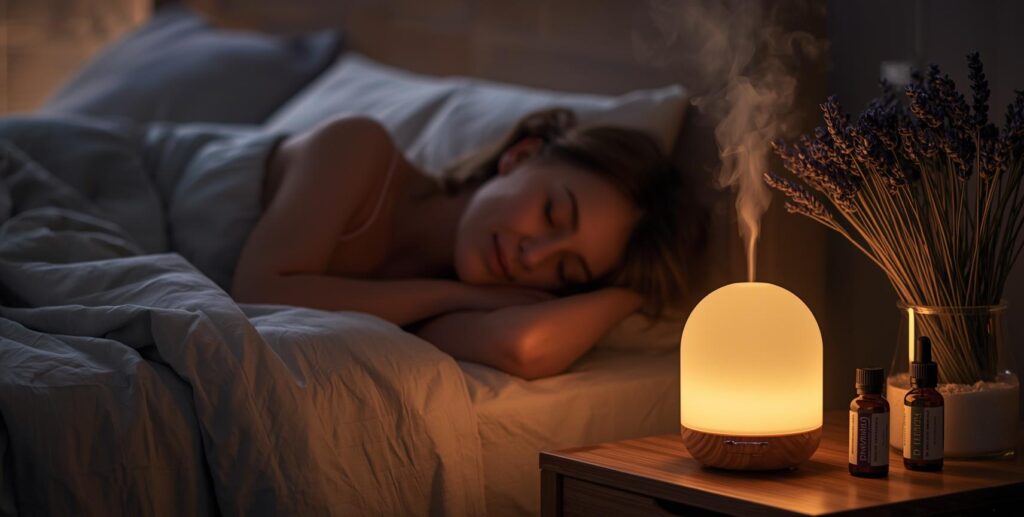
Add 5–10 drops to an ultrasonic diffuser in your bedroom. Run it for 30–60 minutes before bed or set it to turn off automatically while you sleep. This is the gentlest and most effective delivery method.
Topical Application
Dilute 2–3 drops in 1 teaspoon of carrier oil (coconut, jojoba, or sweet almond oil work beautifully). Massage into your wrists, temples, back of the neck, or the soles of your feet — the skin there absorbs oils quickly and deeply. Never apply undiluted essential oils directly to skin.
Pillow Spray
Mix 10 drops of your chosen oil with 1 tablespoon of witch hazel and 60ml of distilled water in a small spray bottle. Shake well and mist lightly over your pillow before sleep. Simple, effective, and lovely.
Warm Bath Soak
Add 5–6 drops of oil (mixed into a tablespoon of carrier oil or full-fat milk first, to disperse safely) to a warm bath. The heat opens your pores, the steam carries the scent directly to your airways, and the bath’s warmth naturally lowers your core body temperature afterward — one of the most powerful natural sleep triggers there is.
3 Blends of Essential Oils for Sleep Worth Trying Tonight
Individual oils are wonderful. But when you blend them, something special happens — the combination creates a synergy that’s more powerful than any single oil alone.
Here are three blends of essential oils for sleep that genuinely work:
1. The Classic Calm Blend (For the anxious, racing mind)
- 3 drops Lavender Essential Oil
- 2 drops Cedarwood Essential Oil
- 1 drop Vetiver Essential Oil
2. The Fresh & Calm Blend (For emotional exhaustion and nervous tension)
- 3 drops Roman Chamomile Essential Oil
- 2 drops Lavender Essential Oil
- 1 drop Petitgrain Essential Oil
3. The Deep Rest Blend (For those who wake in the night or carry tension in their body)
- 2 drops Marjoram Essential Oil
- 2 drops Bergamot Essential Oil
- 2 drops Cedarwood Essential Oil
- 1 drop Vetiver Essential Oil
Add any of these to your diffuser, mix into a carrier oil for topical use, or create a pillow spray. Give your body 3–5 nights to respond before switching to a new blend — sometimes the nervous system needs a little time to learn it’s safe to rest.
A Few Safety Notes
- Always dilute before applying to skin — essential oils are concentrated and powerful.
- Do a patch test on a small area of skin before full application.
- Pregnant or nursing? Talk to your doctor before using essential oils.
- Keep oils away from children’s eyes and out of reach of small hands.
- Some oils, particularly eucalyptus and peppermint, are not appropriate around young children.
You Deserve to Sleep Well
Here’s what we want you to take away from all of this: your sleeplessness is not weakness. It’s not a character flaw. It’s your nervous system telling you it needs something — a little more safety, a little more calm, a little more permission to let go.
Essential oils for sleep won’t solve everything. But they can be the gentle signal your body needs to remember what it already knows how to do — rest.
Start simple. Try lavender in your diffuser tonight. See how your body responds. Then experiment with blends, with methods, with timing. Make it a ritual. Make it yours.
Because great sleep isn’t a luxury. It’s the foundation of everything — your mood, your health, your capacity to show up fully in your own life.
You deserve that. Starting tonight.
Which essential oil for sleep will you try first? Share your experience in the comments — we’d love to hear what works for you.
Sources:
Struggling to fall asleep or stay asleep? Discover the best essential oils for sleep, how to use them effectively, and which blends of essential oils for sleep actually work.
If you’ve ever tossed and turned for hours, staring at the ceiling while your mind races, you’re not alone. Millions of people struggle with getting quality rest every night. While there’s no magic cure for sleeplessness, essential oils for sleep have been used for centuries as a natural, gentle way to calm the nervous system and prepare the body for rest.
In this guide, we’ll walk you through the top 7 best essential oils for sleep, how to use essential oils for sleep safely and effectively, and a few powerful blends of essential oils for sleep that you can try tonight.
FAQ Frequent Ask Question
Q1: Can I mix different essential oils together for better sleep?
Yes, blending essential oils can actually be more powerful than using a single oil alone. Certain oils work synergistically — for example, lavender and cedarwood together calm both the mind and body simultaneously, while petitgrain and roman chamomile address nervous tension and emotional exhaustion at the same time. Start with 2–3 oils in a blend and adjust the ratio based on what your body responds to best.
Q2: Can I use essential oils for sleep around my children?
Some essential oils are safe to diffuse around children over the age of 2, including lavender and roman chamomile, when used in low concentrations. However, oils like eucalyptus, peppermint, and rosemary should be avoided around young children as they can affect breathing. Always diffuse in a well-ventilated room and consult your paediatrician before introducing essential oils into a child’s sleep routine.
Q3: What is the best way to use essential oils for sleep — diffuser or topical?
Both methods work, but they target different things. Diffusing works faster because the scent reaches your brain almost immediately through inhalation, making it ideal for falling asleep. Topical application through diluted oils massaged into the skin works more slowly but can last longer throughout the night. For best results, combine both — diffuse while you wind down and apply diluted oil to your wrists or feet just before bed.
Q4: How many drops of essential oil should I use in a diffuser for sleep?
For sleep, 5–10 drops in a standard 100–200ml ultrasonic diffuser is the recommended amount. Using too many drops doesn’t make it more effective — it can actually become overwhelming and have the opposite effect, making it harder to relax. Start with 5 drops, run the diffuser for 30–60 minutes before bed, and adjust based on how sensitive you are to scent.
Q5: Can essential oils replace sleep medication?
Essential oils are a natural complementary tool, not a replacement for prescribed sleep medication. They work best for mild to moderate sleep difficulties such as stress, anxiety, or occasional insomnia. If you are currently taking sleep medication, never stop without consulting your doctor first. Essential oils can however be used alongside a medical treatment plan to support relaxation and improve overall sleep hygiene.
Q6.Can I apply essential oils directly to my skin for sleep?
No — essential oils should never be applied directly to the skin undiluted as they are highly concentrated and can cause irritation or sensitivity reactions. Always mix 2–3 drops into a carrier oil such as coconut, jojoba, or sweet almond oil before applying to the wrists, temples, or soles of the feet. A dilution ratio of 2% (about 12 drops per 30ml of carrier oil) is safe for most adults.